My thoughts on ‘The Farmer’s Wife’ play at Theatre by the Lake

Updated: 5 days ago
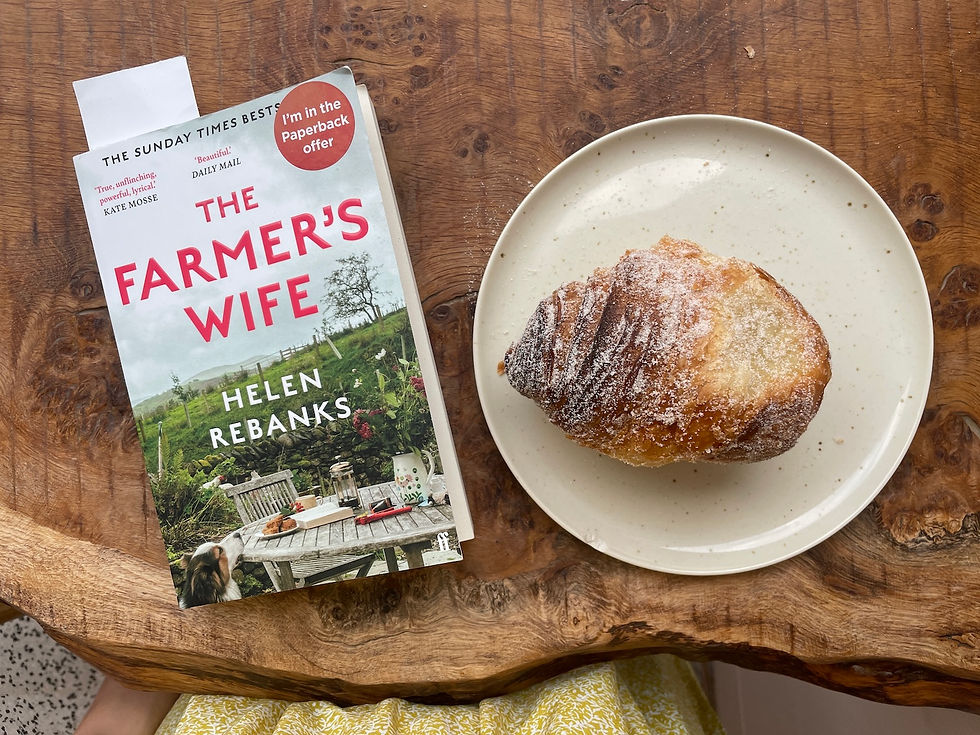
Earlier this month, I had the pleasure of seeing the new play The Farmer’s Wife at Theatre by the Lake in Keswick. Inspired by Helen Rebanks' memoir of the same name, the play follows three generations of women across a single (stressful) day on a family farm in the Cumbrian fells. Written by Hannah Khalil and directed by Liz Stevenson, the play was developed over several years, informed by discussions with farming women across Cumbria.
I am a PhD student at the University of Exeter, researching visions for the future of farming in England. Last year, I cycled over 2000 miles to interview women in farming communities from Cornwall to Cumbria. It is not often that my research interests and my love of theatre overlap, so when the play's world premiere run coincided with my PhD interruption, I decided it was the perfect excuse for a trip to the Lake District. In this blog post, I share some of my reflections on the play (something I am slightly nervous to do, as I don't think I've written about theatre since I did GCSE Drama many years ago!). Because I don't have access to the script, I have included several quotes from Helen Rebank's memoir. And just a warning: there are slight spoilers for the play ahead.

After two nights in Grasmere, I arrived into Keswick on the 9th of October, excited to see the penultimate evening performance of The Farmer's Wife. The aptly named Theatre by the Lake was just several minutes' walk from Keswick's high street and – although it was too dark for me to see – within reach of the Derwentwater shore. The theatre was lovely, but I was disappointed to find there were no Cumbrian ciders on offer at the bar, something I found particularly egregious considering the play I was about to see!
Walking into the Main House, I glanced around at the seats hugging all four sides of the rectangular stage. I noticed several people wearing fleece gillets and had the sudden realisation that some of my farming participants could also be in the audience! I took my seat, located on the front-row of one of the shorter edges of the stage. The seat was considered to have a restricted view, which meant the ticket only cost £12! I'm used to sitting in the nosebleeds when I go to the theatre, so I always love sitting in the front row, where you're close enough to see the actor's facial expressions (although, to be honest, most of the seats in this theatre would probably be close enough for that. It is a fairly intimate space – I doubt there's a bad seat in the whole house).
As we were waiting for the play to start, I chatted with the woman sitting next to me. She told me she was part of the community cast (and assured me that would become clear by the end of the play).
Over the course of 90 minutes, The Farmer's Wife tells a powerful story of the important (and often invisible) labour done by farming women. The play follows a daughter, mother, and grandmother on a family farm in the Cumbrian fells. The three characters – Young, Older, and Oldest – are expertly played by Eireann Devlin, Christine Entwisle, and Roberta Kerr, respectively. Like the three women, the male farmer is never named. His only physical presence in the performance is a pair of wellies and waterproof trousers placed at the edge of the stage (in the Q&A after the play, Helen Rebanks revealed that the wellies had belonged to her husband, James).
Across the course of the day, and a series of flashbacks, we watch the women's interactions as they attempt to balance the labour of housework, paperwork, and on-farm tasks. The play opens with the current farmer's wife listing the numerous tasks farm women juggle on a day-to-day basis ("The bloody eggs always need collecting"), a passage taken directly from Helen Rebank's memoir.
"I have so much work that is my responsibility, yet I am invisible because I don't earn any bloody money. All my efforts feel worthless. I have started to hate this 'beautiful' life." (Rebanks, 2023: p166)
To begin with, the set (designed by Louie Whitemore) is basic: a large wooden table sits at the centre of the stage. Within a few minutes, however, the rest of the kitchen is wheeled on by the actors – one unit even features a working sink! The sound design by Mark Melville is equally impressive – the naughty farm dog (who causes chaos on more than one occasion) transports you into the kitchen. Quickly, the table becomes cluttered with paperwork, baking materials, and farming instruments. Throughout the play, the kitchen table remains at the heart of the action. Like the farmer's wife, the table represents the heart of the farm. It offers the characters far more than a space to eat. It is a space of both conflict and community, a hiding place when life feels overwhelming, a spot for difficult conversations, a link to the past, and even – in one brilliant moment – a stage for an impromptu sing-a-long to Gloria Gaynor's "I Will Survive."
"I want life ahead of us to revolve around my kitchen table." (Rebanks, 2023: p76)

Within this kitchen setting, the current farmer's wife decides to bake a chocolate cake, despite her daughter insisting there are more pressing things that need doing. We see the women work together to prepare the chocolate cake, measuring and stirring real ingredients on stage. When the cakes are finally pulled from the oven, I catch the sweet scent of chocolate and, for just a moment, I wonder if they really did bake a cake on stage.
The conversations between the three characters echoed many of the narratives that emerged in my research with farming women across England: the need to transition to nature-friendly farming practices, the advance of farming technologies, and the undervalued role of farms within rural communities. We see the tensions between farming tradition and innovation, between convenience and values, and between asking for help and admitting weakness. There was a short tirade against vegans and Meat Free Monday, which was, perhaps, unsurprising, but still felt slightly jarring. Through a series of flashbacks, we see how the agricultural sector has changed over the decades, forcing farmers to focus on productivity at the expense of biodiversity. Here, the yellow iris is a key motif – a symbol of the farm's past failure and subsequent rebirth.
The play also reflects many of the challenges raised by my research participants: the never-ending burden of paperwork, the lack of time or breaks, and the constant financial stress. We learn about the competing burdens of childcare, cooking food from scratch, and helping out on the farm. In one scene, the choreography depicts the repetitive and monotonous task of managing livestock, a practiced dance-like movement coordinated between the cast. At separate points, each of the three women say they felt like they were "drowning," a reference to the poor mental health of many members of the farming community.
"Some days I feel like I am slowly drowning in this life." (Rebanks, 2023: p70)
While this is a story about the invisible labour done by farming women, it is also a story about the joys and challenges that can come from living and working with family members. Alongside moments of care and tenderness, we see intergenerational disagreements about farming technology, priorities, and identity. In a tense conversation with her daughter, Older embraces the identity of being a "farmer's wife," a role the young farmer rejects completely. This reflects similar conversations I had with my research participants. Some of the women I spoke to self-identified as “the farmer's wife,” with one explaining that“The farmer's wife has always...been the root of the farming family.” Others, however, rejected this role, preferring to identify as a farmer: “I’m always asked if I’m the farmer's wife, like no, I’m the actual farmer, sorry.” But as Helen Rebanks argues in her book (and in the Q&A following the play), women should have the agency to choose which role they identify with, and not be looked down upon if they decide to identify as a farmer's wife.
"There are many ways to live, many ways to be a woman. I know lots of women don't want what I want. Some would say mine is a small life. But this is how I want to live my life. It is my choice. I chose the good and the bad of it." (Rebanks, 2023: p227)
Another recurring theme in the play is the economic viability of the farming business and the consequences of failing to have open conversations about succession. We watch as the daughter becomes increasingly upset that decisions about the future of the farm are being made without her input. Research by colleagues at the University of Exeter has shown that "Having little or no say in decision-making on the farm is associated with higher levels of loneliness" amongst farming women. As the play reaches its climax, we see the breakdown in trust between mother and daughter (reflected in the chaotic destruction of a certain homemade chocolate cake by a naughty farm dog – a raw and shocking moment that made me gasp).
In the last scene of the play, the community cast enter the stage. This group of local women of all ages share hugs, smiles, and quiet chatter. As they take their seats around the kitchen table, and Older begins to speak, it quickly becomes clear what the gathering is for and why the chocolate cake was so important. While there were multiple heart wrenching moments throughout the play, it was this final scene that made me cry (alongside members of the community cast and plenty of other people in the audience).
As the lights come up in the Main House, the community cast hand out cake to the audience (a new reason to love sitting in the front row). Perhaps the ultimate example of breaking the fourth wall, this sweet moment invites us all to become part of the action. We are welcomed into the kitchen and into the wider farming community, brought together with this simple act of commensality.
"Making our way in the world, in reality, involves a lot of other people." (Rebanks, 2023: p145)
Overall, I thought the play was a moving tribute to the women who live and work on farms in England. By raising the many challenges faced by these women, the production counters the idyllic vision of rurality we see presented by tradwife influencers on social media. It feels like a timely moment for this piece of theatre, contributing to ongoing conversations around food and farming, families and community, and mental health, both within and beyond farming communities. By not naming the characters, Hannah Khalil has allowed any woman – involved in farming or simply living in modern society – to see ourselves and our lives reflected in these characters. After all, it is not just farming women whose labour is often overlooked.
As we ate our Victoria sponge cake, I chatted with the woman sat next to me – Rebecca – and some of the other members of the community cast. Rebecca was kind enough to share this quote about her experience being involved in the production:
"I initially joined because I wanted to make sure there was folk from agricultural stock involved in the show, never imagining just how special the experience would become. Having never been involved in theatre before, I was quite nervous stepping into something so new to me. But from the very beginning, everyone at TbtL was so kind, welcoming, and encouraging that my nerves soon melted away. It’s been truly amazing to be part of the journey and to watch the show grow and come together. The research into agriculture has been phenomenal, and it’s been wonderful to see the care, thought, and dedication that has gone into getting the details right and bringing this important story to life. Being part of the community cast has been such a truly special and unforgettable experience. Bringing together women of different ages, each with their own stories, and becoming part of something so beautiful has been a real gift. The laughter, the memories we’ve made, and the friendships we’ve found along the way mean more than words can say. We may have come together for the show, but we leave with something so much more precious — treasured memories." - Rebecca, member of the Community Cast for The Farmer's Wife
I also chatted to Eve, a local farmer. She had already seen the play earlier in its run, but had come back to see it a second time so she could bring her husband along with her. Here's what she had to say about the play:
"The Farmer's Wife felt like a mirror reflecting my reality and that of so many women who I know and love. It was brutal, heartwarming, but above all honest about both the joys and the challenges of being a woman in farming." - Eve, farmer in Cumbria

After a short break, I was back in the Main House for a Q&A on 'Making the Farmer's Wife' with Hannah Khalil (the playwright), Liz Stevenson (the director), and Helen Rebanks. This was one of many post-show events put on by Theatre by the Lake, including film screenings and conversations with the cast, creatives, and local farmers.
As a theatre nerd, I enjoyed the Q&A almost as much as I enjoyed the play! It was fascinating to hear how the creative team developed the production, as well as their thoughts behind casting and directing decisions. Although the play was initially inspired by Helen Rebanks' memoir, Helen told us that she did not want the play to be about her. Instead, the play is based on interviews the creative team did with farming women across Cumbria, combining key themes and stories from these women into the script, the set, and the staging of the play. I've seen several plays based on the lives of real people (usually historical figures), but I think this was the first time I've seen a play that wove together contemporary (and often overlooked) voices. What a brilliant way to communicate the findings of social science research and to touch the hearts of so many people!
As part of the Q&A, we heard from several farmers who praised the play for highlighting the important role of women in farming. I nodded along as one farmer suggested that the show should tour across the country, being adapted slightly to fit the dominant farming type in each region. Others commented on the authenticity of the script, set, and props, recognising their own lives reflected back from the stage. Helen told us about hearing from women around the world who wrote letters saying that her memoir was the first time their lives had been depicted on the page. And now, those stories are on the stage.
After the Q&A, I was very excited to briefly meet all three women on the panel, as well as Eireann Devlin, who played Young. Congratulations again to the cast and creatives behind this powerful piece of theatre. Thank you for sharing the stories of farming women in such a compelling and moving production.
I love the theatre. I love the first moments after the house lights have dimmed and the audience sits in excited silence waiting for the action to begin. I love the creative ways stories are told on the stage, combining movement, light, and sound. I love the ephemeral nature of live theatre that forces me to focus on the action on-stage instead of the anxieties of everyday life.
But most of all, I love the collaboration, the teamwork required by the cast and the crew to bring a story to life, to move an audience to laughter or tears. As was mentioned by one of the panellists in the Q&A, this production of The Farmer's Wife was a product of each member of the cast and crew coming together – a different lighting or set designer, for example, could have led to a very different final outcome.
A successful production is also a collaboration between the cast and the audience. Although I went to the theatre on my own, watching live theatre is always a shared experience. For those 90 minutes, I sat alongside hundreds of strangers to bear witness to the craft and skill of the brilliant actors (and the wider creative and production teams). Even if we never see each other again, for that brief moment in time, we were part of a community, linked by this shared experience.
I am always inspired by the collaboration required by live theatre. In many ways, it reminds me of farming.

On the Saturday, I found myself back at Theatre by the Lake, not once, but twice. In the afternoon, I went to see Amy Bateman's photography exhibition, Forty Farms, which features stunning photography and stories from farms around Cumbria...

...and that evening, I was back to watch the post-show film screening of Rooted Here, a 35-minute film featuring Ruby Nicholson, Sarah Louise Graham, Susan Aglionby, and Helen Rebanks sharing their farming stories in their own words, which can be watched here:
I read Helen’s memoir in the first year of my PhD, and here I am, in the final months of my PhD, writing a blog post about the play inspired by that memoir. Life has a funny way of coming full circle.


Comments